2019-05-31

Product 07- Chatbots with Human Characters (updated on 2019.10.9)


0. Introduction

We need to do transactions with outside world to have the resources we cannot produce by ourselves, but there are a lot choices and field knowledge we don't know. Before a Decision Making, it takes a lot of time and money to gather information, check them one by one and play games with the suppliers (Information Asymmetry, Transaction Cost, Game Theory, not just for business services but also for Personalized Services). Chatbot with characters may help,

1. Chatbot with Holding Character

Nowadays, most chatbots are bots with a Holding Character. They have SOP to deal with most requested services or questions (e-commerce, payment methods, after-sales, holding activities..). User can follow the prompts to get needed service step by step. The services are limited and executed through SOP. The processes take time and you cannot jump to the service you need directly.

2. Chatbot with Exploitative Character

When application becomes much bigger and complicated, you may design a chatbot with Exploitative Character which can guide you to have basic knowledge and jump to the target service you need quickly like an angel.

3. Chatbot with Receptive Character

When application becomes much bigger and complicated, you may design a chatbot with Receptive Character which can provide you tools to help you (e.g. calculator app, everyday-use-text app..) like an assistant.

4. Chatbot with Marketing Character

When goods & services are more and more on a platform, you may design a chatbot with Marketing Character which can help user to find or promote target goods & services like a salesman.

5. Chatbot with Multiple Characters

In a real application, you may design a chatbot with mixed characters, e.g. an assistant with Receptive & Hoarding Characters. It cam provide users necessary helps according to personal conditions and habits. 

6. Bot vs. Assistant

  • Bot is an AI running SOP for business side (the front end of Digital Marketing)
  • Assistant is an AI running services for user side (Personalized Services).

7. Application Fields

  • Product 04. AI Device- Smart Speaker (as a Platform of Services)

2019-05-30

Company 07. Adopting AI to gain more company profits & forming a core-competence

Company Profits =  Customer Values - Company Costs

 1. Adopting AI to create more customer values in new & old businesses (personal, customized, consulting, VIP, high value-added, more productive..)

2. Adopting AI to lower costs in old business
Human-characterized AIs replace some administration (SOP) and sales (marketing) staffs.
--------------------------------------------------------------------------------------------------------------------

Develop AI as a Company's Core-competence

3. Developing an AI team to become company's core-competence in one field (B2C)
Hire more AI engineers to form a team and apply the related technologies in one potential field.
  • E.g Amazon's website and e-commerce business.
4. Developing AI teams to serve other companies (B2B)
Build more AI teams to serve other corporations (better be the leaders or different fields)
  • E.g Amazon's AWS for other corporation customers

Coursera


Reference


2019-05-17

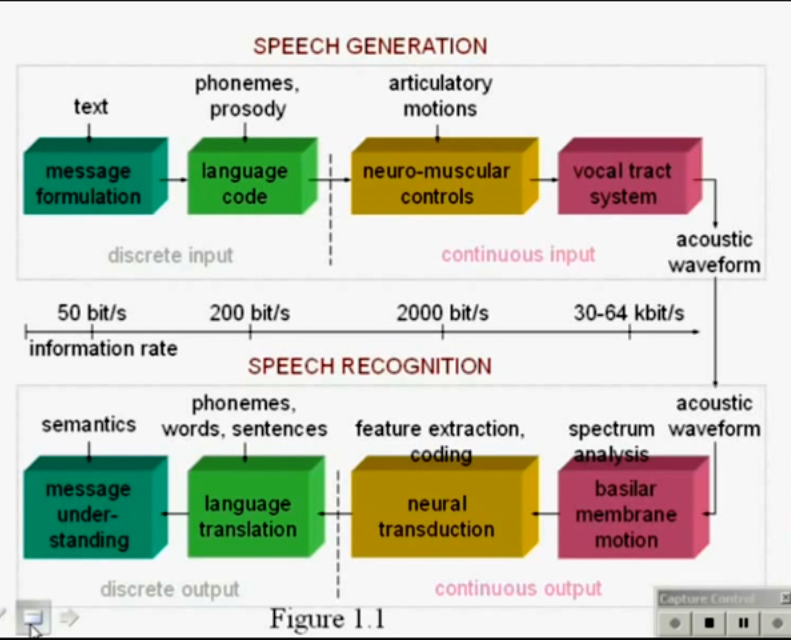
Basic 6. Sound, Speech, Natural Language Processing & AI with Human Characters (for Socialized Interaction)

Basic Sound Processing in Python | SciPy 2015 | Allen Downey

Besides the above technologies, you can design an AI figure with the following human characters to interact with users.
  • Receptive Orientation: Female, tame, pleasant, lovely, youth, obedience, ..
  • Exploitative Orientation: Male, aggressive, harsh, cool, seducing, heroic, ..
  • Hoarding Orientation: Neutral, warm or cold, rigid, synthesized, middle age, professional, ..
  • Marketing Orientation: Design them for target customers.

Reference

2019-04-19

Company 06. How to cross the big chasm of a new product life cycle? (updated on 2020.1.22)


Product Life Cycle

1. An ideal curve of a new product life cycle is like the following one:


2. How people to adopt a new product is like this one:


3. In real life, we usually get this one (a big chasm and tornadoes):


4. How to cross the big chasm?

For example, R&D engineers develops a smart and powerful App with a lot of functions but only few early adopters are interested to use it. We need AI figures with Exploitative or Marketing Orientation to lure people how to do and what they can be benefited.

After newbies become veterans with Exploitative or Marketing Orientation, they'll show off what they can do and teach other newbies with Receptive or Hoarding Orientation through social mediums, blog..). Hoarding Orientation people will be the majority and resist to adopt the other similar products (a stable cash cow).

4.1 Early Market
Traditionally, we use advertisement or low price to prompt and lure customers. That is effective for commodity products because customers have experience of similar products. You can adopt Marketing Orientation AI to do the same jobs to extend the effect with less cost. For innovation products, customer lack experience to use them before so hesitate. You can adopt  Exploitative Orientation AI to show how to do and what they can be benefited to arouse customers' interests. For example, a hero saves you when you have a problem or a awkward situation.
 

4.2 Mainstream Market
During this stage, most customer know this new innovation and develop their own habit and preference, They want to keep these routines and repeat them next time. You can adopt Hoarding Orientation AI or specialist AI to help them to repeat some specific processes or doing some extra works (e.g. calculation or translation).
 

4.3 late Market
During this stage, companies usually ask to lower costs and maybe cut some services rare used. You can keep AI services only and cut staff services to save the costs.


See also,

Product 04- AI Device- Smart Speaker (as a Platform of all Services,


Company 05. Platform Strategy


References

  1. Lecture "Innovation: Technology, Market and Business Models" (Prof. Chiang, Chiung-Tsung, College of Management, National Taiwan University)


2019-04-18

Company 05. Platform Strategy

iPod Strategy

  1. Start with a simple and easy device or application.
  2. Focus on quantity growth to make it popular. (Book: Catalyst Code)
  3. Build a platform for Apps and contents (complementary supplier side and user side)
  4. Have social and mobile features to make it growing faster.
  5. Provide high-end devices (e,g, iPhones)
  6. Add more functions and services on it.
  7. Keep it upward spiraling..

Smart Speaker Strategy

1. See link Product 04- AI Device- Smart Speaker as a personal assistant and also a platform to provide services and to control electrical appliances.

2. Design and produce (or outsource) Product 05- AI Device- Electrical Appliance but keep control over design (patents) and core components.


3. Extend Smart Speaker as a Home Center Device to have more functions.

4.Build an Industry Ally to have more suppliers to join and design more appliances together..

Other examples:

Product 06- AR Facility- AR Hospital for People of All Ages


References

  1. Lecture "Network Industries and Platform Strategy" (by Prof.  Chiang, Chiung-Tsung, College of Management, National Taiwan University)

2019-04-09

0. World Modernization


World Modernization

0. Dialectical Thinking & Discussing...

.. Parliamentary system/Democracy against Autocracy & Monocracy (through heredity) ..

1. Renaissance from Europe

2. The Enlightenment: Age of Exploration, Age of Enlightenment & Age of Reason..

3. Capitalism Vs. Socialism Vs. Communism

4. Technology & Investment/Finance (2 wheels of industrialization) from Europe and British Empire -> US -> UN/WTO (International Division of Labor & World Trade) 

5. Industrial Revolution: Power Engine from human to coal/oil/uranium/solar/natural -> Electricity & Electronics -> Computer & 3C 2/2.5G -> Cell Phones 3/4G -> Big Data & AI & 5/6G

6. AI -> new ethics of societies (need to be established among human & AI) & Safety (Human Supervision)

7. Pandemic (COVID-19) will re-organize UN and WHO.


    Russia Modernization

    • 1918 俄羅斯蘇維埃聯邦社會主義共和國 (Rossiyskáya Sovetskáya Federatívnaya Socialistícheskaya Respublika),簡稱蘇俄,
    • 1922 蘇維埃社會主義共和國聯盟,簡稱蘇聯。
    • 1991 蘇聯解體
    • 1999~ 普丁獲得時任俄羅斯總統葉爾欽任命為總理..

    China Modernization

    • 1900 Eight-Nation Alliance (八國聯軍,維新:船堅炮利就夠了嗎?)
    • 1919 May Fourth Movement (五四運動,全盤西化還是中西學體用爭論?)
    • 1949 Mao and Communist Party started to rule China (Industrialization- Join WTO)
    • 2012~2022~ Xi started to rule China..

    Next

    • 2022 俄烏戰爭 -> West (US/Eu) against East (Russia/China)?

    0. International Political Economics & New Economies (updated on 2022.June.22)


    0. Background: See link Modernization

    • Technology & Investment/Finance (2 wheels of industrialization) from Europe and British Empire -> US -> WTO (World Trade & International Division of Labor) 
    • Oil & Currency (USD/CNY?)
    • Since 2019, how pandemic diseases (e.g. COVID-19) will change the world? Border closed -> Regional Segregation -> Secure resources (medical, medicines, vaccines, automation & 5G/AIs..) -> New Supply Chain/Logistics 
    •  Since 2022 Feb-24, Russia-Ukrian war also causes heavy inflation (gas, grains..)
    • US FED raises interest rate in June, July, ..of 2022.
    • Slow down or Recession?


    1. US International Strategies

    • US against Russia, Japan, Islam, China
    • US allies: Europe, The Five Eyes, Japan.. (Indo-Pacific)
    • Let Labor-intensive industries go to: Mexico, Southeast, India..
    • Keep knowledge-intensive industries in US and promote USD as a word-trade currency (open markets, trade deficit, technology & industry & education, entertainments, culture..).
    • Open China Market (WTO, trade negotiations..) <= Game Theory playing =>> New Cold War between US vs.China allies (redistributing trade deficit to other friendly countries)
    • West (US/EU) against East (Russia/China)?


    2. China International Strategies

    • Internal: Xi learned from Mao and his experience during Cultural Revolution (1966~1976). He set concentration camps for Xinjiang dissidents and sent in obedient people and armies to rule them. Now, I speculate he'll do similar things to Hong-Kong and Taiwan. Less blood inside and less opposition outside. Take control over these regions slowly and quietly.
    • International: Xi learned from US. Expand trade and economic influence and promote RMB as a word-trade currency (The Belt and Road). 
    • Xi keeps his ruling (autocracy of one party mixing Ching Dynasty + Mao ruling) without the limit of 10 years. It will delay China's further economic development in decades until his death like Mao.


    • Xi's main character looks like the Hoarding orientation which positive & negative aspects are as the following descriptions in Erich Fromm's book "Man for Himself" published in 1947. 
    Positive Aspect
    Negative Aspect 
    practical
    unimaginative
    economical
    stingy
    careful
    suspicious
    reserved
    cold
    patient
    lethargic
    cautious
    anxious
    steadfast, tenacious
    stubborn
    imperturbable
    indolent
    composed under stress
    inert
    orderly
    pedantic
    methodical
    obsessional
    loyal
    possessive


    2.1 Hong Kong People's Awakening

    • 1949 Sino-British Joint Declaration: HK would be returned to China in 1997 and kept autonomous for 50 years until 2047 (One country, two systems).
    • Hong Kong played a role for attracting foreign investments and kept booming.
    • 2019 Hong Kong People found CCP's ruling was getting in because of Extradition Law Amendment Bill. They were awakened and fighting for autonomy.
    • Tibet and Xinjiang are the examples for them. CCP is the most wicked organization in the world like Nazi.

    2.2 Taiwan International strategies

    • Cooperate with US as one ally (President Tsai Ing-wen).
    • Expand trade and economic influence (a bridge between developed countries and developing countries),
    • Competitive Industries: Semiconductor, ICT, 5G/AIot, ..
    • Strategic Industries for future development in Asia-Pacific: Medical & Health Care Center (Biotechnology), Financial Center & Services (take part of HK's funding and experts), Aerospace Technology, Chinese Cultural creation (Pop music, movies..), Agriculture & Ecology Center, ..

    Note: Center is an application & data center (a platform, a network & a supply chain). It doesn't have to be big or tangible. 


    3. Russia International Strategies

    • Putin (autocracy of one party and his charisma) exploits Russia's natural resources (Oil, gas, metals,,) and military forces to gain political and economical advantages.
    • Putin's main character looks like the Exploitative orientation which positive & negative aspects are as the following descriptions in Erich Fromm's book "Man for Himself" published in 1947. 
    Positive Aspect 
    Negative Aspect 
    active
    exploitative
    able to take initiative
    aggressive
    Able to make claims
    egocentric
    proud
    conceited
    impulsive
    rash
    self-confident
    arrogant
    captivating
    seducing


    4. Demography

    • Aging society with fewer children 
    • M-Form Society
    • Movement of People (tourists, immigrants- capital, skilled, young..): See link Demography (Video in Chinese subtitle)

    5. New Economies

    • ICT: Computer & 3C 2/2.5G -> Cell Phones 3/4G -> Big Data & AI & 5G
    • Digital contents (TV/Movies, Vlog, live broadcasting..)
    • ID & Security check
    • The Experience Economy: experience, sensational, entertainment, culture & culture differences, art, theme facilities, events, AR/VR, personal..
    • Movement of People (tourists, immigrants- capital, skilled, young..)
    • Medical & Medicare Economy (because of aging society and unhealthy foods & lives)
    • Pandemic diseases (e.g. COVID-19) will destroy, re-build world economy, re-organize UN/WTO/WHO, and accelerate the applications of automation & AIs.

    References

    1. Lecture "Service Sector: Its Essentials, Value Creation and Business Models" (by Prof.  Chiang, Chiung-Tsung, College of Management, National Taiwan University)
    2. See also the following link: Basic 1. Types of Human Characters extracted from Erich Fromm's book " Man for Himself" (1947);